

Text by Eloïse Duguay, Painting by Ernst Yohji Jaeger at Gallery Crèvecoeur "We Step Into the Vanishing Light" (2026)
There was that heat wave. Damn, it was hell. For those of you who haven’t heard about it, let me tell you that you live in a cave, and I’m begging you on my knees, next time, please, please invite me. Amid the intense heat and agony, lying naked at home in the dark, my body covered with towels soaked in cool water to keep from drying out, a chaotic feeling came over me. The inability to think. The inability to write anything other than in jerky bursts, like an erratic pulse.
When I describe how I managed to survive, my childhood friend, Mina, tells me that it reminds her of the protocol they follow in the hospital’s intensive care unit. “It’s called the Siberian Tunnel. When a patient arrives after suffering a heat stroke, their temperature can sometimes rise as high as 45 degrees. So, we lay them down, protect them with towels, then with ice, until they’re almost completely covered. Then we aim a fan at them, all while surrounding them with emergency blankets.”

Meanwhile, I have Sean Paul's Temperature playing on repeat in my head.
There’s only one place where everything calms down. The only place that forces me to leave my home to go to work—and where there’s air conditioning—is the subway. Faced with the isolation created by the constantly closed shutters, the only way to escape loneliness is to reassure myself by watching the other passengers in the wagon or through the window. With my fingers sticky with sweat (since I haven’t bought a small pocket fan—an accessory I find as useful as it is ugly), I take note of a few of them.
A young man dressed entirely in white (linen clothes) who sits down across from me. He’s holding three boxes of bandages; his hands are covered in wounds, and he’s taking pictures of his pants and shirt, which are covered in blood. He’s my age—in his thirties. He is clean-shaven, his face is unblemished, and while his body is in a terrible state, his mustache is impeccably trimmed.
A woman says, “If this is an escape from reality, perhaps we should blame reality rather than the escape.”
A man in a suit is sitting on the ground next to his scooter, on the Carrousel Bridge, working on his computer in the shade.
A man with only one arm carries his bed, tucked under his arm, and dashes into the subway tunnel to hide his belongings. He disappears into the darkness for a few moments. No train cars pass by. Then he comes back out and returns to the bright light on the platform, as if nothing happened. I wonder what is going on in the dark of the tunnels, under the city. I wonder if the air is fresher.
People sleeping on the train. All those bodies slumped in their seats, relaxing because the air is cooler and the wagon rocks gently as the parched landscape rolls by. I’ve only managed to sleep on a train once, on the trip back from Naples to Paris.
One thing that stands out to me from this event is the Parisians’ perseverance in living through the Apocalypse. They were an army of ghosts undulating across the asphalt, like the beginnings of a mirage deep in the heart of a parched desert. Filling the bars every night because it’s always cooler there than at home, swimming in the Canal Saint-Martin while knowing that an eye might sprout on their foreheads once they emerged from that greenish, seemingly radioactive water, hesitating on their phones between placing bets on the World Cup or the weather (neither of which was profitable). In this collective ordeal, accompanied by pain and helplessness, a sense of excitement and solidarity emerged. In a way, the more surrounded we felt, the less we depended on others. Can’t wait for the next one? Probably not.

Eloïse Duguay, 28, is an author and freelance writer. She was born and lives in Paris, where she writes for contemporary artists, art galleries, and cultural institutions. In 2019, she launched the blog La Beautaniste, where she publishes columns that blend art, literature, daily life, and travel.
Discover our art collection
-
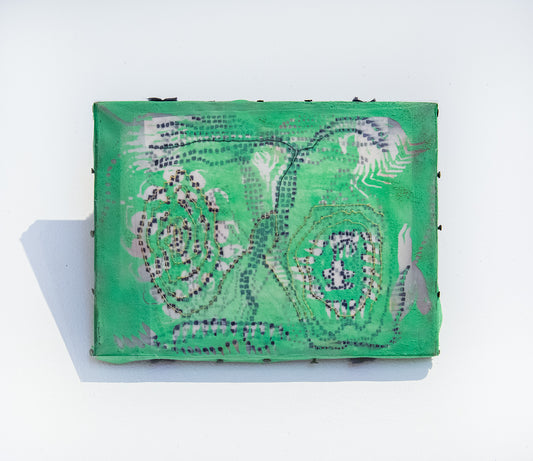
Untitled, 2025
Regular price 800€Regular priceUnit price per -
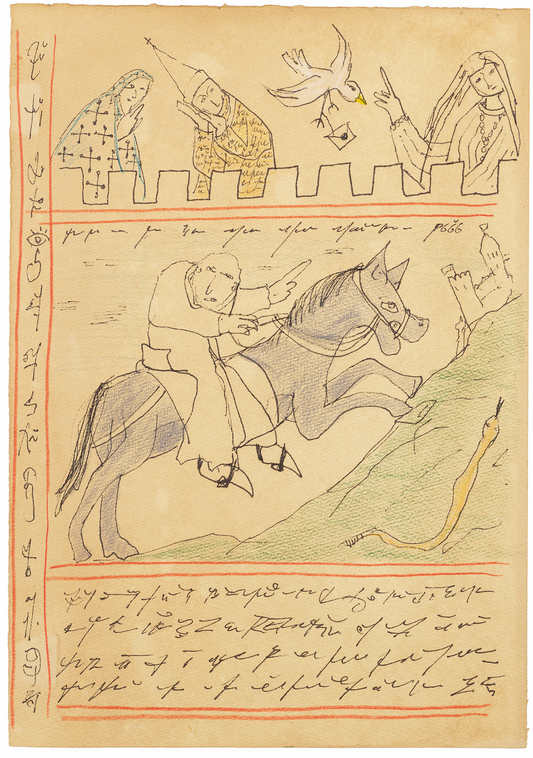
Book of Demos/Buch der Dämonen (Sheet 4)
Regular price 490€Regular priceUnit price per -
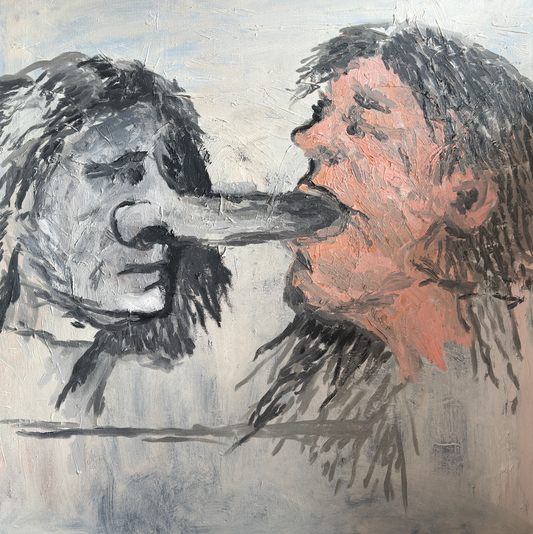
A thankful present
Regular price 450€Regular priceUnit price per -
A estabilidade enchendo o bucho, 2024
Regular price 1,300€Regular priceUnit price per

More stories
View all-

"Such was my instinct. Licking off his tear. "
An untitled text by Lara Konrad, author of the forthcoming novel Insufferable, about a tongue, slowness and touch, and tasting the world without shame.
"Such was my instinct. Licking off his tear. "
An untitled text by Lara Konrad, author of the forthcoming novel Insufferable, about a tongue, slowness and touch, and tasting the world without shame.
-

A day in the studio with Sofía Serpa Arango
On a chilly December afternoon in South London, painter Sofía Serpa Arango let us into her studio and into a world built from Colombian costumbrismo, Austrian folklore, and cowboy myth.
A day in the studio with Sofía Serpa Arango
On a chilly December afternoon in South London, painter Sofía Serpa Arango let us into her studio and into a world built from Colombian costumbrismo, Austrian folklore, and cowboy myth.
-

Days in the studio with Irena Posner
Two days in Carrara, Italy with a sculptor who carves stone into dogs, cats, feet, and something that feels like reflections of ourselves.
Days in the studio with Irena Posner
Two days in Carrara, Italy with a sculptor who carves stone into dogs, cats, feet, and something that feels like reflections of ourselves.


