

Text by Eloïse Duguay, Photos by Florine Kieffer
We say two things about Paris: that it is a city that never changes; that it is a city you leave only to return to it. Paris absorbs us. Paris drains us. Depending on the district where we live, our side of the Seine River, the bars we frequent, our bookstores, our daily canteen, our favorite museums, or the metro line we take every day, it reflects back to us an image of ourselves. I’m approaching the end of my twenties. Over the past ten years, I’ve wanted to leave Paris (where I was born and raised) about once a year. Sometimes, I really tried. I hung out in Hamburg, almost moved to Athens, and considered Rome, only to always end up coming back. After these unsuccessful
attempts to escape, I finally found a 20-square-meter room with an outrageous rent to live amidst my books, between an Italian restaurant run by Turks and a massage parlor that’s really just a front for a prostitute who works during office hours. Conditions sufficiently unsatisfying to write.
“Sufficiently unsatisfying” is a phrase that sums up the Parisian mindset quite well. Ask a Parisian to tell you about their city, and they’ll say the buildings are beautiful but always under construction, the people are well-dressed but obnoxious, the food is good but too expensive, and the apartments are absolutely worth keeping but unsanitary. The Parisian grumbles about his favorite topics while still believing he lives in the most beautiful city in the world. Deep down, talking about Paris is like going into therapy to discuss your relationship with your parents: everyone has done it before, but to quote Tolstoy, every family has its own story. If Paris is so deeply rooted and immutable, if every change is accompanied by a revolution, the best way to write about Paris is to do so from a punctual perspective. This is where the chronicle
format comes in; unlike a book, it captures a fleeting moment in the present. What you are reading already belongs to the past, set against a backdrop that never changes. Fortunately for me, if this column is exceptional or simply good, so much the better; if it is mediocre and shallow, you won’t remember it.
Now, I’ve laid the groundwork. Now, I can give myself permission to complain and marvel at everything that catches my eye. I can transcribe it in the most infra-ordinary* form, which, as George Perec would say, brings together “What really happens, what we experience, the rest, all the rest (…). What happens every day and comes back every day, the banal, the everyday, the obvious, the common, the ordinary, the background noise, the usual.” I can seek out what, beneath the words, takes on a different dimension of beauty.
*Georges Perec, L'infra-ordinaire, Seuil, 1989

Eloïse Duguay, 28, is an author and freelance writer. She was born and lives in Paris, where she writes for contemporary artists, art galleries, and cultural institutions. In 2019, she launched the blog La Beautaniste, where she publishes columns that blend art, literature, daily life, and travel.
Discover our art collection
-
Untitled, 2025
Regular price 800€Regular priceUnit price per -
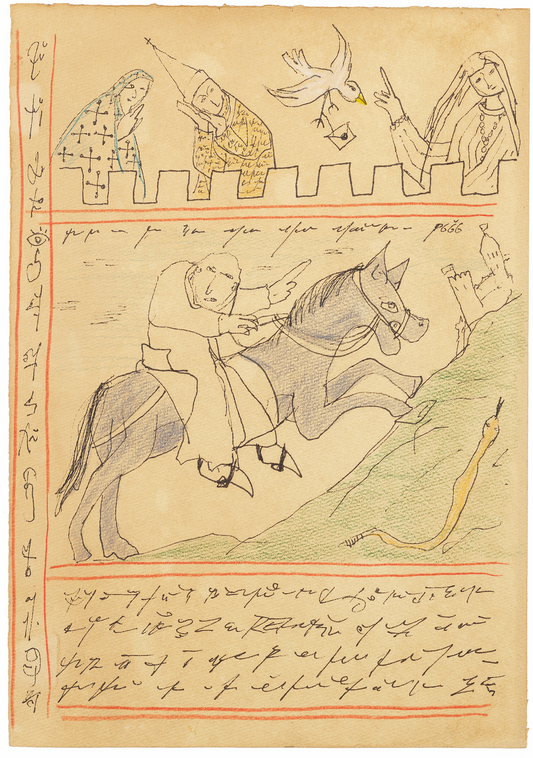
Book of Demos/Buch der Dämonen (Sheet 4)
Regular price 490€Regular priceUnit price per -
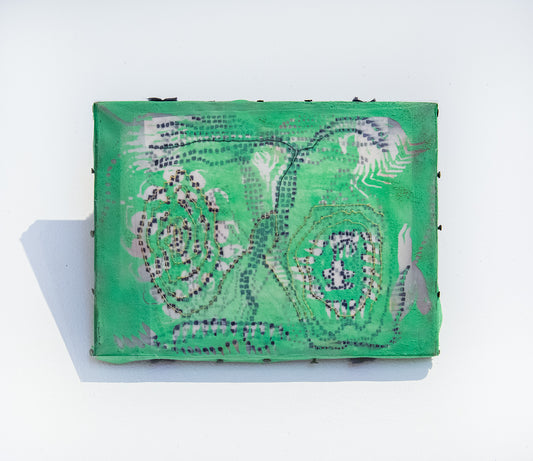
A thankful present
Regular price 450€Regular priceUnit price per -
A estabilidade enchendo o bucho, 2024
Regular price 1,300€Regular priceUnit price per

More stories
View all-

Another Day in the Studio with Bondoso Bandido
It all started two years ago with a pizza in Caldas da Rainha, two artists walking in with cigarettes and extravagant glasses, and a feeling I couldn’t shake. 30+ studio...
Another Day in the Studio with Bondoso Bandido
It all started two years ago with a pizza in Caldas da Rainha, two artists walking in with cigarettes and extravagant glasses, and a feeling I couldn’t shake. 30+ studio...
-

Antonia Teillery
Crabs, aquariums, birthday parties: Chilean painter Antonia Teillery turns forgotten internet images into paintings on plastic. A short portrait of one afternoon in Santiago.
Antonia Teillery
Crabs, aquariums, birthday parties: Chilean painter Antonia Teillery turns forgotten internet images into paintings on plastic. A short portrait of one afternoon in Santiago.
-

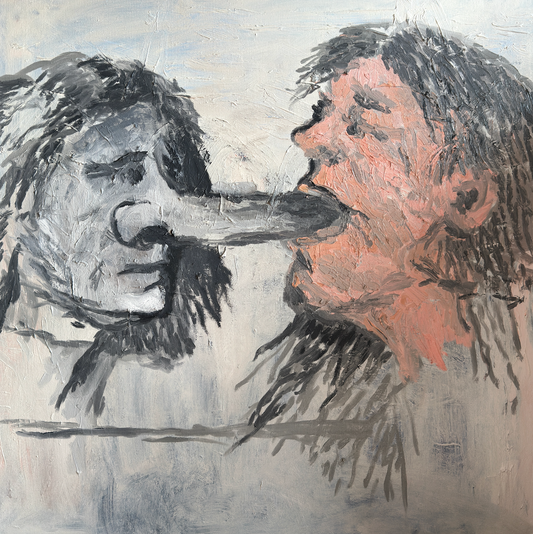
"Such was my instinct. Licking off his tear. "
An untitled text by Lara Konrad, author of the forthcoming novel Insufferable, about a tongue, slowness and touch, and tasting the world without shame.
"Such was my instinct. Licking off his tear. "
An untitled text by Lara Konrad, author of the forthcoming novel Insufferable, about a tongue, slowness and touch, and tasting the world without shame.


